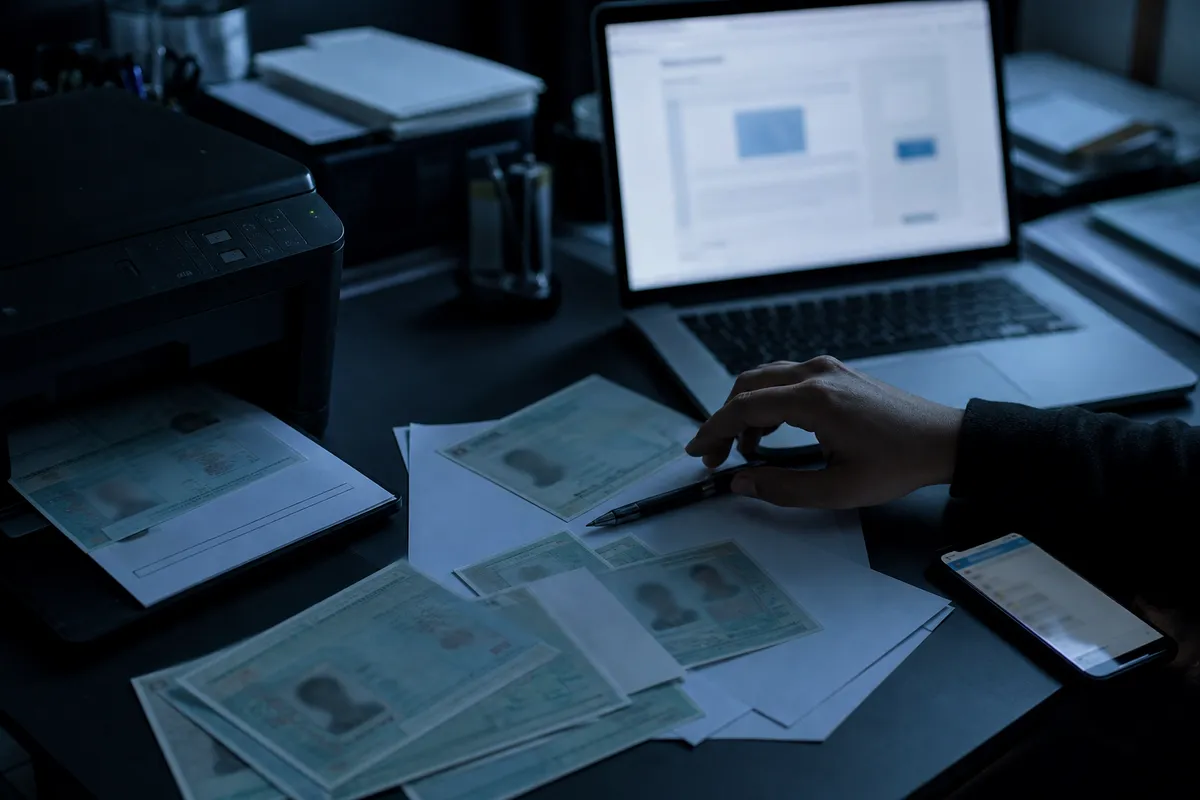
International ID Card Fake - Legal Considerations
This guide is for buyers, holders, and travelers seeking clarity on international ID cards and their legality.
An "international ID card" is likely fake if it claims official status but cannot be verified with the named government or issuing authority. A privately issued card may not be unlawful to own, but presenting it as government identification could lead to fraud, forgery, immigration, or travel consequences; stop using it and seek local legal advice.
What “International ID Card” Actually Means
There is no universally recognised civilian identity card that can replace a passport or government-issued national ID. National identity cards and passports serve distinct legal purposes and are issued by government authorities, while other documents often referred to as "international ID cards" may lack official recognition.
National identity cards are issued by individual countries to confirm a person's identity and nationality. Passports, on the other hand, are travel documents that allow individuals to enter foreign countries and prove their citizenship. Both types of documents undergo strict verification processes and are equipped with features such as machine-readable zones (MRZ) and biometric verification to prevent identity theft.
In contrast, documents like the International Student Identity Card (ISIC) and the International Driving Permit (IDP) serve specific functions but do not replace national identity cards or passports. The ISIC is primarily for students, offering discounts and benefits worldwide, while the IDP allows individuals to drive legally in foreign countries, provided they also hold a valid national driving license.
Other documents, such as employee badges or privately issued membership cards, do not serve as legal identification for travel or citizenship purposes. These cards may offer access to services or facilities but lack the legitimacy of government-issued identity documents.
| Document Type | Issuer | Intended Use | Proves Identity/Nationality |
|---|---|---|---|
| National Identity Card | Government | Domestic identification | Yes |
| Passport | Government | Travel and identification | Yes |
| International Student Identity Card | Private Organisation | Student discounts and benefits | No |
| International Driving Permit | Government/Private | Driving in foreign countries | No |
| Employee Badge | Employer | Workplace identification | No |
| Membership Card | Private Organisation | Access to services or facilities | No |
Using any document that claims to be an "international ID card" without government backing could lead to legal repercussions, including accusations of fraud or presenting counterfeit documents. It is crucial to verify the legitimacy of any identity document before use, especially in international contexts. For further insights on the legal implications of fake documents, refer to the relevant legal considerations.
When an International ID Card Becomes a Fake or Illegal Document
Determining when an international ID card is considered fake or illegal involves understanding various factors, including intent and the specific actions taken regarding the document. Not all custom badges or novelty IDs are illegal; however, counterfeit, altered, or fraudulently obtained documents carry significant legal risks.
Types of Documents
- Genuine Documents: Issued by government authorities, such as national identity cards or passports, these documents are authentic and legally recognised.
- Counterfeit Documents: These are imitations designed to deceive and are illegal to produce, possess, or use.
- Altered Documents: Changing information on a genuine document, such as a date of birth, can render it illegal.
- Fraudulently Obtained Documents: Acquiring a legitimate document through deception, such as using another person’s ID, is a criminal offence.
- Novelty IDs: Often marketed as fun or collectible, these can be legal if not presented as legitimate identification but may still lead to legal issues if misused.
Factors Leading to Offences
The legality of an ID card can change based on several actions:
- Intent: If the holder intends to use a document as legitimate identification, it may be treated as a counterfeit, even if they believe it to be harmless.
- Possession: Simply possessing a counterfeit or altered document can result in legal consequences, depending on local laws.
- Production: Creating a fake document, such as a passport or national ID card, is a serious crime under laws like 18 U.S.C. § 1028 in the United States.
- Transfer and Presentation: Sharing or attempting to use a fraudulent document, even with a disclaimer like “novelty,” can lead to charges of fraud or forgery.
Examples of Illegal Actions
- Changing a Date of Birth: Altering the birth date on an ID card can lead to accusations of forgery.
- Using Another Person’s Genuine ID: This is identity theft and carries severe penalties, including fines and imprisonment.
- Adding Disclaimers: Including terms like “novelty” while copying official security features can still result in legal repercussions if the document is used as a legitimate ID.
Understanding these distinctions is crucial for anyone considering the use of an international ID card. Always verify the legitimacy of identity documents to avoid potential legal consequences. For more information on the implications of using fake documents, see Fake Documents for Sale - Legal Consequences.
Fake ID Laws and Penalties by Jurisdiction
Understanding the laws surrounding fake ID cards is essential, as penalties vary widely by jurisdiction. The following table provides a summary of laws and potential penalties for fake identity documents in the United States and the United Kingdom, along with an explanation of the European Union's approach.
| Jurisdiction | Relevant Law | Possible Penalties | Notes |
|---|---|---|---|
| United States | 18 U.S.C. § 1028 (updated 2022) | Fines up to $250,000 and imprisonment for up to 20 years for production or use of counterfeit documents. | Penalties can vary by state; federal law is stringent, especially for identity theft cases. |
| United Kingdom | Identity Documents Act 2010 (updated 2020) | Maximum penalty of 10 years imprisonment for producing, possessing, or using false identity documents. | Local laws may impose additional penalties, including fines and community service. |
| European Union | No unified law; penalties set by member states | Varies by country; could include fines, imprisonment, or both. | Each member state determines penalties for identity fraud and counterfeit documents. |
In the United States, 18 U.S.C. § 1028 specifically addresses the production, use, and transfer of counterfeit documents. This law imposes severe penalties, reflecting the seriousness of identity fraud and related crimes. In the UK, the Identity Documents Act 2010 outlines similar penalties, including imprisonment of up to 10 years for serious violations.
In the European Union, while there is no overarching legislation regarding fake IDs, individual member states enforce their laws. This can lead to significant discrepancies in penalties. For example, some countries might impose hefty fines or lengthy prison sentences, while others may offer lesser penalties.
Additional penalties can apply depending on the nature of the offence:
- Manufacturing: Creating counterfeit documents often carries the heaviest sentences, reflecting the intent to deceive.
- Possessing: Simply having a fake ID can result in fines or probation, especially if there is an intent to use it.
- Selling or using: Engaging in the sale or actual use of a fake ID can lead to both criminal charges and civil penalties.
It is critical to understand that laws differ not only between countries but also within regions. Anyone considering the use of an "international ID card" should consult legal advice to avoid potential legal consequences. For further insights into the legal implications of fake documents, refer to Fake Documents Punishment - Legal Insights.
Airports, Borders, Immigration, and International Students
Presenting false identification to authorities, such as the Transportation Security Administration (TSA), border officials, or immigration agencies, can lead to severe consequences that extend beyond age-related misuse. The gravity of the situation escalates when an individual uses a counterfeit document during an official inspection, as opposed to merely having it in their wallet.
When an ID is presented to an official, it signals intent to use it as legitimate identification. This can result in charges of fraud or presenting a counterfeit document, which carries significant penalties. For instance, under 18 U.S.C. § 1028, penalties for producing or using counterfeit documents can include fines up to $250,000 and imprisonment for up to 20 years. These laws are particularly stringent in the United States, where presenting a false ID can lead to immediate legal action and possible criminal charges.
International students and travellers should be especially cautious. Using a fake identity document can lead to visa denials, removal from the country, or future immigration issues. For example, if a student is found using a counterfeit ID while applying for a visa or during their studies, they could face not only immediate expulsion from their educational institution but also long-term bans on re-entry into the country.
Consequences may vary based on the nature of the offence. Examples include:
- Visa Consequences: A false ID can result in visa applications being denied, and previous entries into the country can be scrutinised.
- Admission Issues: Universities may dismiss students found using counterfeit documents, leading to academic and financial repercussions.
- Removal Proceedings: Immigration agencies may initiate removal proceedings against individuals found using fake IDs, significantly impacting their ability to remain in the country.
- Future Immigration Barriers: A record of using a false identification can complicate future visa applications or residency requests, as authorities may view the individual as a risk.
In summary, the stakes are high when it comes to presenting identification at airports, borders, and immigration checkpoints. The seriousness of using a counterfeit or false ID cannot be overstated; it can lead to immediate legal consequences and long-term ramifications for travel and residency. Always verify the legitimacy of identity documents before use to avoid potential legal issues.
Buying a Fake ID Online or on the Dark Web
Purchasing a fake ID online or through the dark web carries serious legal risks, regardless of whether the card is ever received or used. Liability can arise from ordering, payment, importation, attempted offences, or conspiracy, depending on local laws. For instance, in the United States, laws like 18 U.S.C. § 1028 impose strict penalties for the production and use of counterfeit documents.
Customs authorities, such as U.S. Customs and Border Protection (CBP), have the power to seize fake IDs during importation. Even if a buyer does not physically receive the card, transaction records, communication logs, and digital device evidence can be used to establish involvement in illegal activities. For example, messages exchanged with sellers can be traced back to the buyer, leading to potential charges.
There are various scenarios where legal consequences may arise:
- Customs Seizure: If a package containing a counterfeit document is intercepted, the recipient may face immediate legal scrutiny.
- Postal Interception: Mail services may flag suspicious packages, leading to investigations that could implicate the buyer.
- Transaction Records: Payment data can be linked to the buyer, providing authorities with evidence of the purchase.
- Device Evidence: Digital footprints left on devices can reveal attempts to acquire fake IDs, leading to further investigation.
Additionally, buyers must be cautious of the personal information shared with sellers. Many sellers on the dark web collect identity documents, selfies, addresses, and payment data, increasing the risk of identity theft or extortion. This information can be exploited for malicious purposes, including fraud or blackmail.
In conclusion, engaging in the purchase of a fake ID can lead to severe legal ramifications and expose individuals to risks beyond mere legal penalties. It is crucial to understand the implications and potential consequences before considering such actions. For further insights into the legal implications of fake documents, see Fake Documents for Sale - Legal Consequences.
How Fake ID Cards Are Identified
Identifying fake ID cards involves several verification methods that are crucial for establishing authenticity. These methods include examining physical security features, ensuring data consistency, checking machine-readable zones (MRZ), and verifying barcodes or chips. Additionally, biometric verification and checks against authoritative issuer records play significant roles in determining whether an identity document is legitimate.
Verification Categories
Physical Security Features: Genuine identity documents, such as national identity cards and passports, incorporate various security features like holograms, watermarks, and microprinting. These elements are often difficult to replicate and can be inspected under specific lighting conditions.
Data Consistency: The information on the ID must be consistent across all sections, including the MRZ. Inconsistencies in names, dates of birth, or document numbers can indicate a counterfeit.
Machine-Readable Zones (MRZ): Most modern ID cards contain an MRZ that can be scanned to quickly verify the information. If the data read from the MRZ does not match the printed information, it raises suspicion.
Barcodes and Chips: Some identity documents include barcodes or chips that store data securely. Scanning these can reveal discrepancies that indicate a fake ID.
Biometric Verification: Advanced systems may use biometric data, such as fingerprints or facial recognition, to confirm identity. If the biometric data does not match the holder, the ID may be deemed fraudulent.
Checks Against Authoritative Issuer Records: Authorities can verify the legitimacy of an ID by cross-referencing it with records from the issuing body. This is a reliable method for confirming authenticity.
Limitations of Detection Tools
While many people rely on generic "fake ID detector" apps, these tools have significant limitations. They often focus solely on the visual appearance of an ID, which can be misleading. A counterfeit document may look convincing at first glance but fail upon closer inspection or verification through the methods mentioned above.
Visual checks alone cannot establish authenticity. Counterfeiters are continuously improving their techniques, making it challenging for even experienced officials to identify fakes based solely on appearance. Therefore, relying solely on visual assessments can lead to serious errors.
In summary, a comprehensive approach that includes physical inspection, technological verification, and authoritative checks is essential for accurately identifying fake ID cards. Understanding these methods can help individuals avoid legal consequences associated with the use of counterfeit documents.
Are Novelty, Custom, and Prop ID Cards Legal?
The legality of novelty, custom, and prop ID cards is not simply determined by their labels. Instead, it hinges on several factors: design, the authority they represent, security features, intent, and actual use. A card may be labelled as a "novelty" or "not a government document," but this does not automatically exempt it from legal scrutiny.
For instance, cards that closely imitate official identity documents, such as passports, national identity cards, or International Driving Permits (IDPs), can be deemed illegal. The key distinction lies in the card's design and its potential for misuse. Fictional props designed clearly for entertainment, like those used in films, typically do not pose legal issues if they are marked as such and do not resemble real documents. In contrast, cards that mimic real identification can lead to serious legal repercussions under laws like 18 U.S.C. § 1028 in the United States, which addresses counterfeit documents.
Design boundaries can help mitigate legal risks. Examples of safer practices include:
- Fictional Issuers: Cards should feature issuers that are clearly fictional and not related to any real authority.
- Conspicuous Nonofficial Markings: Clearly displaying terms like "novelty" or "not valid for identification" can help clarify the card's purpose.
- Unique Designs: Using designs that are distinctly different from official documents helps reduce the risk of confusion.
Producers of novelty ID cards must check local laws, as regulations vary significantly from one jurisdiction to another. For example, while some regions may allow novelty IDs with strict guidelines, others may impose harsh penalties for any resemblance to government-issued documents.
In summary, the legality of novelty, custom, and prop ID cards is complex and dependent on multiple factors. Individuals considering the use or creation of such cards should ensure compliance with local laws to avoid unintended legal consequences.
What to Do If You Possess or Are Accused of Using a Fake ID
If a fake ID is in possession or there are accusations regarding its use, immediate action is essential. Here is a checklist of steps to follow:
Cease Usage: Stop presenting the document immediately. Continuing to use a fake ID can exacerbate legal problems.
Do Not Alter or Destroy: Avoid any attempts to modify or discard the ID. Tampering with evidence can lead to additional charges.
Preserve Receipts and Communications: Keep all documentation related to the purchase or use of the ID, including receipts, emails, or messages with sellers. This information may be crucial in legal discussions.
Obtain Legal Advice: Consult a qualified local criminal or immigration lawyer. Legal professionals can provide guidance tailored to specific circumstances, which is vital in navigating potential legal consequences.
In situations involving urgent legal matters, such as arrest, border detention, an upcoming court date, or immigration proceedings, contacting a lawyer should be a top priority. These scenarios require immediate legal intervention to protect rights and address any accusations effectively.
In less urgent situations, such as general verification questions or concerns about identity theft, contacting the genuine issuing authority may be appropriate. This is particularly relevant if there is suspicion of identity theft or if a replacement document is needed. Authorities can provide guidance on how to proceed without further complicating the situation.
Understanding the difference between urgent and non-urgent scenarios is crucial. Urgent matters demand immediate action to prevent escalation, while non-urgent inquiries can often be addressed through proper channels without immediate legal representation.
By following these steps, individuals can better navigate the complexities of possessing or being accused of using a fake ID, thereby minimising potential legal repercussions.
Legal Risk Matrix for Fake ID Actions
| Action | Jurisdiction | Intent | Document Type | Official Setting | Immigration Status |
|---|---|---|---|---|---|
| Creating | Varies by country | Intent to deceive | Counterfeit or imitation | Public or private | Depends on visa status |
| Ordering | Local laws apply | Intent to acquire | Fake ID or novelty | Online or in person | Depends on visa status |
| Possessing | Local laws apply | Intent to use | Counterfeit or imitation | Public or private | Depends on visa status |
| Transferring | Local laws apply | Intent to distribute | Counterfeit or imitation | Public or private | Depends on visa status |
| Presenting | Local laws apply | Intent to deceive | Counterfeit or imitation | Official settings | Depends on visa status |

Q&A
Can TSA see my fake ID in my wallet?
A wallet may be inspected during airport screening, but an X-ray image alone does not establish whether an ID is genuine. Presenting the card for identification can trigger document checks, questioning, confiscation, or referral to law enforcement.
What is the hardest fake ID to spot?
No fake ID can be assumed to evade inspection, and guidance on choosing one would facilitate deception. Even a convincing card may fail when its barcode, chip, personal details, photograph, or issuer record is checked.
Are fake IDs illegal in the USA?
Creating, selling, transferring, possessing, or using a fake ID may be illegal under federal or state law, depending on the document and intended use. Risk increases when the card imitates a government document or is presented to obtain entry, goods, services, employment, or official benefits.
Is an international student ID a government-issued ID?
Usually not: a student card is generally issued by a school, university, or private student-card programme. It does not replace a passport, residence document, national identity card, or other government-issued identification unless the organisation requesting ID expressly accepts it.
Can using a fake ID affect a visa or immigration status?
Yes. Use of a fake ID may raise fraud, misrepresentation, criminal-conduct, or false-claim issues that can affect a visa application, admission at the border, existing status, or later immigration benefits. Anyone questioned by police, border officials, a school, or an immigration agency should seek advice from a qualified immigration lawyer before making detailed statements.
Conclusions
What should happen first? Treat any alleged "international ID card" as unofficial until its issuer and legal status are independently confirmed.
- A global-sounding name does not make a card government-issued or valid for travel, immigration, employment, or age verification.
- Legality depends on the jurisdiction, the card’s design, the holder’s intent, and how the document is presented or transferred.
- Labels such as "novelty" or "not valid for identification" do not remove risk when a card closely resembles official identification.
- If police, border, court, or immigration action is possible, stop using the card, retain related records, and obtain local legal advice promptly.
- Students and travellers should use documents expressly accepted by the relevant authority rather than relying on seller claims.
Next, review Fake Documents Punishment - Legal Insights to assess possible consequences before taking further action.
Explore More on ID Card Legitimacy
Discover additional resources and insights regarding international ID cards.